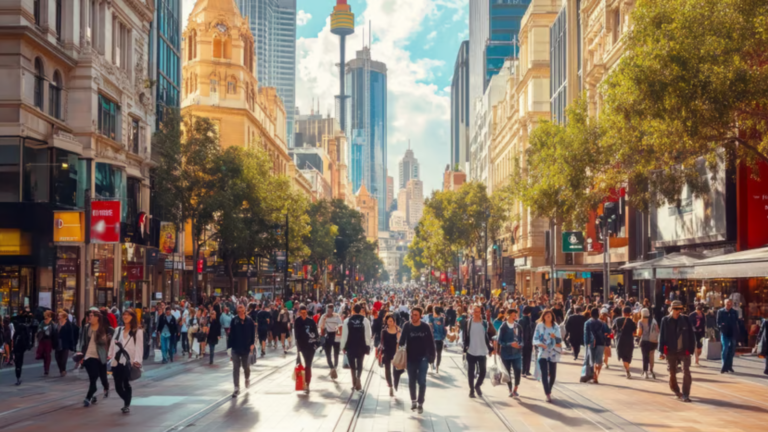
Queensland’s government has locked in several cost‑of‑living measures in its latest budget, but stopped short of offering broad, short‑term relief for all households. Instead, the focus is on targeted support and long‑term commitments including a pledge to legislate 50‑cent public transport fares to make them permanent.
Around 700,000 vulnerable households will see their electricity rebate rise by 3.4 per cent, lifting the subsidy to nearly $400. The government has also confirmed a freeze on bulk water prices for South East Queensland, a move expected to save households an average of $130 over two years.
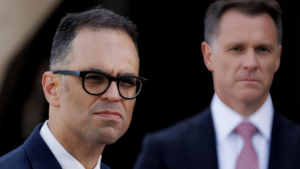
Premier David Crisafulli said the budget delivers support Queenslanders can “rely” on, even as the state’s finances remain deep in the red. The budget is not expected to return to surplus until 2029-30, when a modest $619 million surplus is projected the first since 2023-24.
For now, deficits loom large. The government is forecasting an $8.85 billion deficit this financial year, followed by another $6.18 billion shortfall in 2026-27.
Despite the red ink, total debt projections have improved slightly compared with earlier forecasts. Debt is expected to reach $162.62 billion next financial year about $7.9 billion lower than predicted in last year’s budget. By 2025-26, debt is forecast at $142.38 billion, more than $4 billion better than January’s update. Still, by 2029-30, total debt is set to climb to $216.47 billion, a 52 per cent increase over four years.
Treasurer David Janetzki told parliament the government was delivering “lower debt” and a clear pathway back to surplus all without introducing new or increased taxes.




+ There are no comments
Add yours