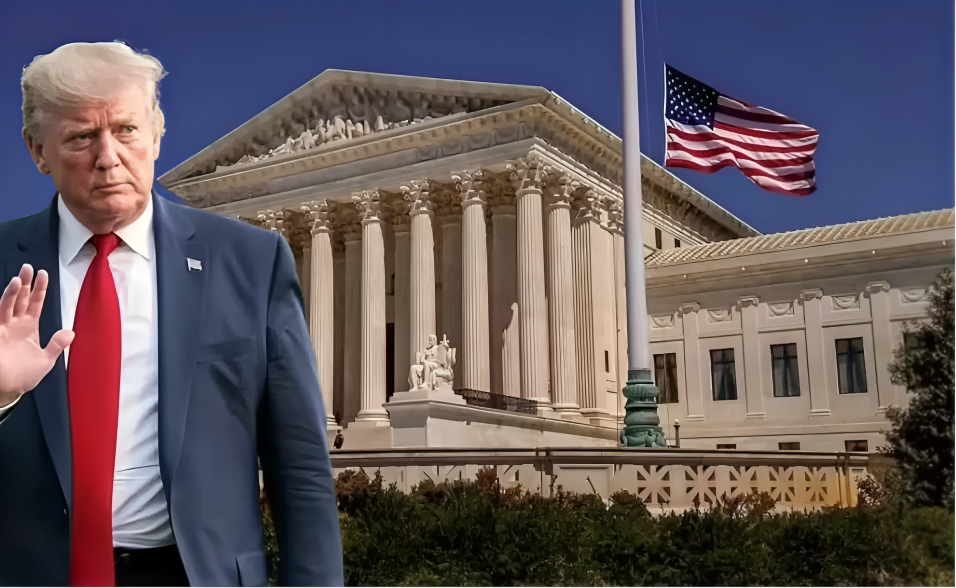
The U.S. Supreme Court’s decision to strike down President Donald Trump’s global tariffs has brought relief to many import‑reliant businesses but it also opens the door to a long, messy period of legal battles, refund claims and fresh tariff threats. Instead of clarity, companies now face a new wave of uncertainty.
The ruling invalidates duties that collected an estimated $133.5 billion between January 2025 and mid‑December, but the court did not address whether that money must be returned. Analysts say the refund fight will now shift to lower courts, with the U.S. Court of International Trade expected to oversee the process. Importers will not receive refunds automatically; each company must file its own lawsuit. More than 1,000 firms have already begun that process. Trump himself acknowledged the looming legal slog, telling reporters, “We’ll end up being in court for the next five years.”
Within hours of the ruling, Trump vowed to impose a new 10 percent tariff using a different legal authority Section 122 of the Trade Act of 1974. But that law only allows such duties for 150 days unless Congress extends them, meaning the measure is likely temporary and could trigger further challenges. Trump has also signaled new investigations under Section 301, which could pave the way for longer‑lasting tariffs. Analysts say the ruling simply “opens a new chapter” in U.S. trade policy, one marked by volatility and unpredictability for global businesses.
The decision also removes one of Trump’s fastest tools for imposing sweeping tariffs. Treasury Secretary Scott Bessent said emergency‑based tariffs had been “custom made” to give the administration leverage in negotiations. He insisted the White House would still reach similar tariff levels, but “in a less direct and slightly more convoluted manner.”
The ruling may also complicate trade negotiations. Some partners may reconsider commitments built around emergency‑based tariffs, though analysts believe most will stick to existing deals to avoid destabilizing relations with Washington. Countries still finalizing agreements, however, may now see an opportunity to push for better terms.
For consumers, the ruling lowers the average effective tariff rate to 9.1 percent, down from 16.9 percent still the highest since 1946, excluding 2025. Despite Trump’s push for new duties, some economists believe the decision will force a broader reset of U.S. tariff policy, potentially leading to lower overall rates and a more orderly process for future trade actions.









+ There are no comments
Add yours