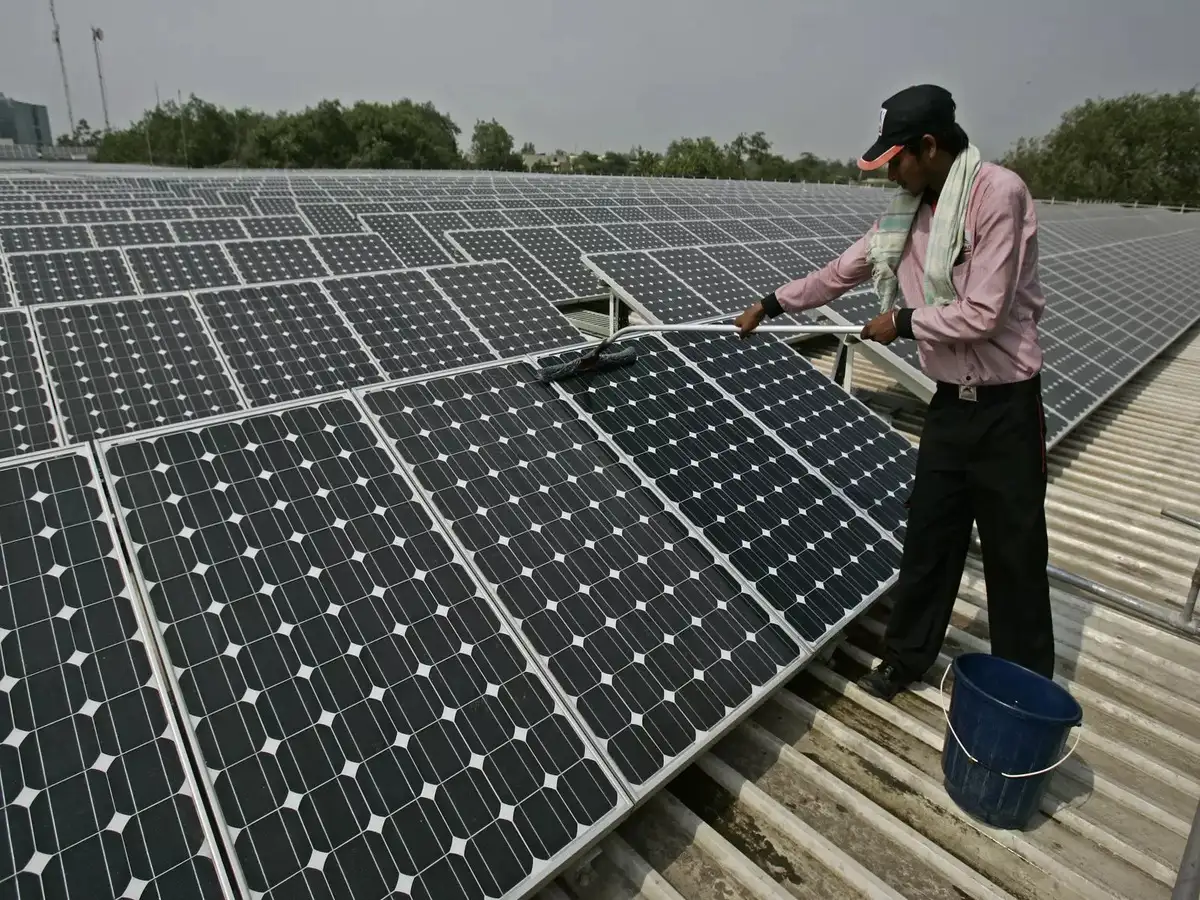
India’s flagship rooftop solar program central to Prime Minister Narendra Modi’s clean‑energy vision is falling well short of targets, despite generous subsidies meant to accelerate adoption. Vendors, analysts and state‑level data point to a mix of loan delays, bureaucratic hurdles and resistance from state utilities as key obstacles.
The shortfall poses a fresh challenge to India’s goal of nearly doubling its clean‑energy capacity to 500 gigawatts by 2030, and comes as the government considers pausing new renewable‑energy tenders due to a growing backlog of unbuilt awarded projects. If rooftop solar uptake continues to lag, analysts warn India may remain heavily dependent on coal‑fired power.
Subsidies High, Installations Low
The Ministry of New and Renewable Energy launched its revamped residential subsidy scheme PM Surya Ghar in February 2024, covering up to 40% of installation costs. But progress has been slow: only 2.36 million rooftop systems have been installed, far below the 4 million target set for March.
“Banks’ reluctance to lend and states’ hesitance to promote the schemes could derail India’s efforts to transition away from coal,” said Shreya Jai, lead energy analyst at Climate Trends.
Government data shows that three in five applications remain unapproved, while 7% have been rejected outright.
Loan Delays and Documentation Hurdles
Under the scheme, consumers choose a vendor, who then arranges bank financing. But banks have been rejecting or delaying loans due to documentation gaps, credit concerns and title disputes.
A senior official at a major state‑owned bank said standardised paperwork is essential:
“If loans go bad, banks can take away these panels but what will we do with them?”
Vendors report that applications are often rejected because electricity bills show old arrears or because land records remain in the names of deceased relatives. Residents argue many of these issues stem from administrative errors dating back decades.
India’s Department of Financial Services says it has responded by allowing co‑applicants to resolve title issues and simplifying documentation requirements.
Some banks, however, are reportedly demanding collateral for loans under ₹200,000 even though scheme guidelines do not require it further slowing adoption.
Utilities Reluctant to Promote Rooftop Solar
State‑owned utilities have been lukewarm in promoting rooftop solar, fearing revenue losses as high‑consumption households shift away from the grid.
“Wealthier households typically have high electricity consumption, tariffs and reliable roof access,” said Niteesh Shanbog of Rystad Energy. “When they shift from the grid, it leaves a larger financial burden.”
The renewable energy ministry maintains that installations are accelerating and that more than 3 million households have already benefited. It also argues that rooftop solar reduces subsidy payouts for state utilities, helping keep residential power bills stable.
Still, with approvals lagging and banks cautious, India’s rooftop solar ambitions face a steep climb and the country’s broader clean‑energy transition may hinge on whether these bottlenecks can be resolved.









+ There are no comments
Add yours