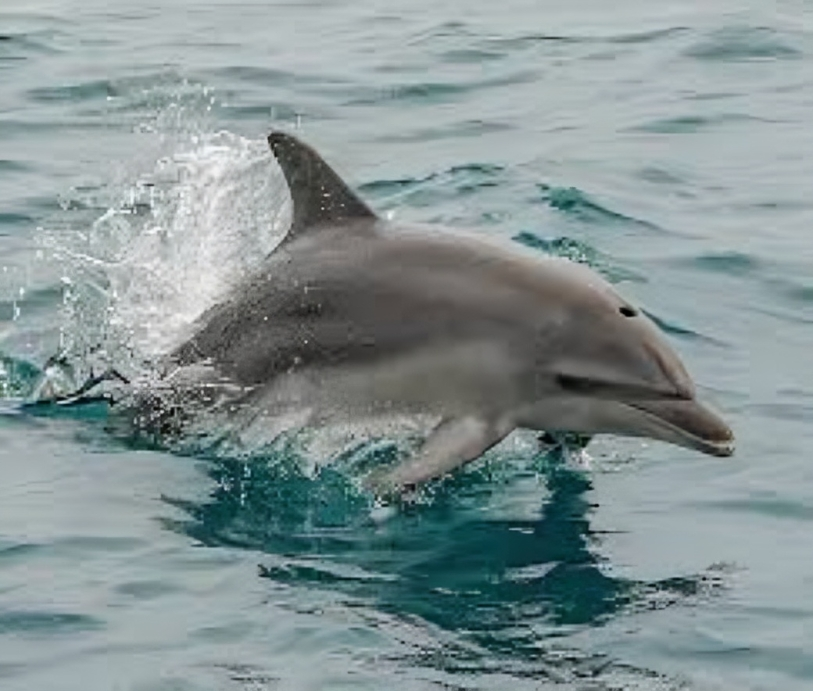
Even for someone who has spent years documenting ocean wildlife, witnessing two elusive dolphin species in a single day was nothing short of extraordinary. For marine photographer Jodie Lowe, the late‑January trip beyond the continental shelf off Port Macquarie delivered a moment she describes as once‑in‑a‑lifetime.
Lowe had joined a pelagic birdwatching tour when the deep waters revealed an unexpected spectacle: two small pods of the rarely seen, round‑headed Risso’s dolphins, with one group accompanied by the delicate and fast‑moving pantropical spotted dolphins. The encounter unfolded roughly 25 kilometres offshore, where the continental shelf drops to depths of 60 to 80 metres a zone far less familiar to most coastal observers.
While many marine animals live in the shallower coastal and intertidal regions, the deeper offshore waters host a rich and often hidden diversity. Lowe, who works on whale‑watching charters and has a long‑standing fascination with marine life, instantly recognised the unusual visitors.
“Risso’s dolphins are quite a lot larger … they have more of a blunt head and don’t have a beak like your typical dolphin,” she explained. Their bodies are also marked with distinctive white scars the result of social interactions and conflicts within their species. These dolphins can reach up to 4 metres in length and weigh around 500 kilograms, their dark grey skin becoming increasingly etched with pale lines as they age.
By contrast, the pantropical spotted dolphin is far smaller, growing to about 2.6 metres and weighing roughly 120 kilograms. They are noticeably more petite than the well‑known common bottlenose dolphin, which can reach nearly 4 metres and weigh up to 650 kilograms.
For Lowe, the rare pairing of these two species in one outing was a reminder of the mysteries that lie just beyond the familiar coastline and the wonders waiting in the deep.









+ There are no comments
Add yours