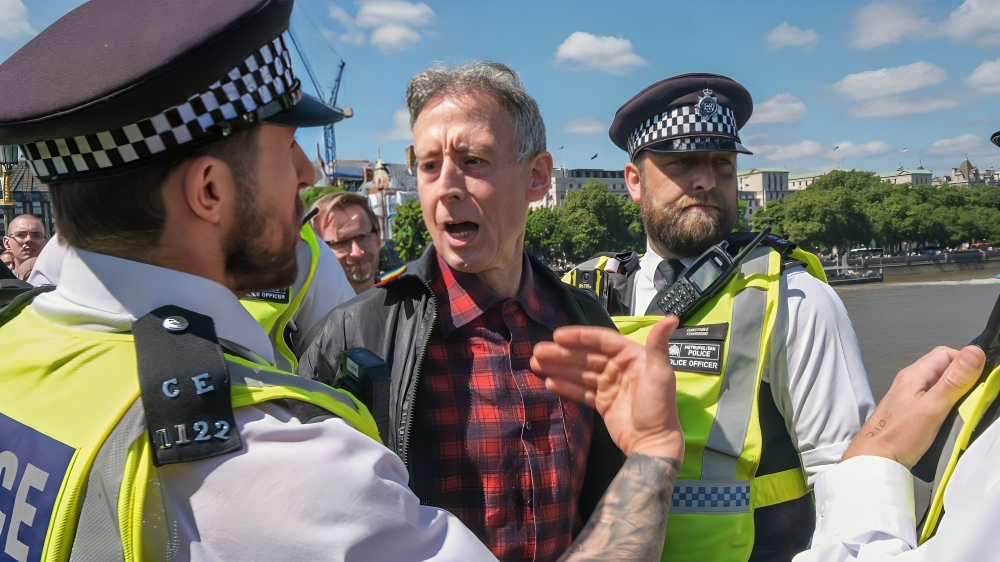
Prominent human rights activist Peter Tatchell was detained during a pro‑Palestine march in central London, a move that has ignited sharp criticism over policing and the boundaries of lawful protest.
Tatchell, 74, was arrested for carrying a placard that read: “Globalize the intifada: Nonviolent resistance. End Israel’s occupation of Gaza & West Bank.” His foundation said the arrest amounted to an “attack on free speech,” arguing that police had wrongly deemed the word intifada unlawful.
The Peter Tatchell Foundation accused officers of “overreach,” warning that the decision reflects a growing trend of restricting and criminalizing peaceful demonstrations. The group stressed that intifada is not a crime under UK law.
Tatchell himself described the term as an Arabic word meaning “uprising, rebellion or resistance” against Israeli occupation. He emphasized that it “does not mean violence and is not antisemitic,” adding that his criticism targets “the Israeli regime and its war crimes, not Jewish people.”
Following his arrest, Tatchell was taken to Sutton police station for detention. The Metropolitan Police later confirmed that a 74‑year‑old man had been arrested on suspicion of a public order offense for displaying a sign containing the phrase “globalize the intifada.”
The force previously announced in December that protesters using the phrase could face arrest, citing a “changing context” after the Bondi Beach attack in Australia.
Witness Jacky Summerfield, who marched alongside Tatchell, said he had been walking peacefully near officers for about a mile before encountering a counter‑protest. She described seeing him suddenly surrounded and “manhandled by 10 officers,” before she was pushed behind a police cordon and unable to speak to him.
She said she could only hear that the arrest was made under Section 5 of the Public Order Act.






+ There are no comments
Add yours