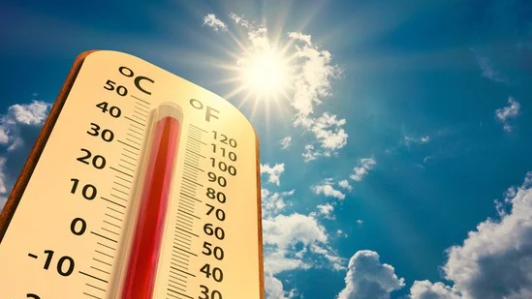
Last year ranked among the planet’s three warmest ever recorded, according to the World Meteorological Organization, which released its latest climate assessment on Wednesday. European climate scientists also confirmed that global temperatures have now stayed above 1.5 degrees Celsius of warming for the longest continuous period since record‑keeping began.
The WMO reviewed eight major climate datasets from around the world. Six of them, including those maintained by the European Center for Medium‑Range Weather Forecasts and the UK’s national weather service, placed 2025 as the third warmest year on record. The remaining two datasets ranked it as the second warmest in the 176‑year archive.
All eight confirmed the same alarming trend: the last three years have been the hottest the planet has ever experienced. The warmest year on record remains 2024.
Three Years Above the 1.5°C Threshold
Differences in rankings stem from variations in measurement methods, which include satellite observations and ground‑based weather stations. But the broader picture is clear. Scientists at ECMWF said 2025 marked the end of the first three‑year stretch in which the global average temperature stayed 1.5°C above pre‑industrial levels. That threshold is widely seen as the point beyond which climate impacts become increasingly severe and, in some cases, irreversible.
“Every fraction of a degree matters, particularly when it comes to worsening extreme weather,” said Samantha Burgess, a senior climate lead at ECMWF. She added that 2026 is likely to rank among the five warmest years ever recorded.
A Critical Moment for Global Climate Policy
Under the 2015 Paris Agreement, governments pledged to avoid surpassing the 1.5°C limit when measured as a long‑term global average. But continued greenhouse gas emissions mean the world is on track to cross that threshold before 2030, a full decade earlier than originally projected.
“We are bound to pass it,” said Carlo Buontempo, director of the Copernicus Climate Change Service. “The choice now is how to manage the overshoot and its consequences for societies and natural systems.”
Current long‑term warming stands at roughly 1.4°C above pre‑industrial levels. On a short‑term basis, annual global temperatures exceeded 1.5°C for the first time in 2024.











+ There are no comments
Add yours