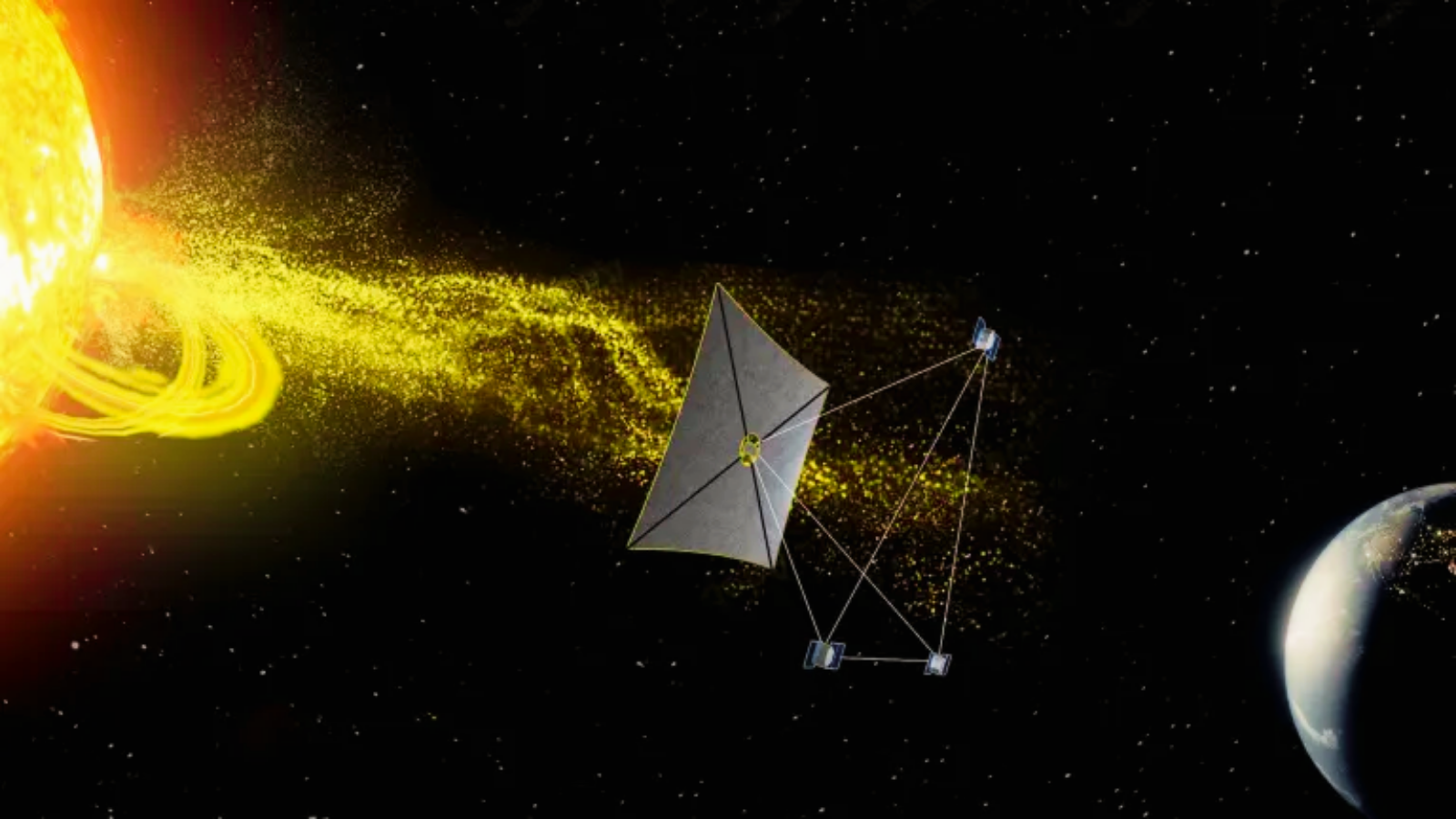
While last week’s auroras thrilled observers across Australia, scientists say they were far less intense than the “Mother’s Day” solar storm of May 2024, the most powerful in two decades.
That storm, also known as the Gannon event, lit up skies worldwide for three days and dramatically compressed Earth’s plasmasphere a layer of charged particles surrounding the planet to just 20% of its normal size, according to a new study published in Earth, Planets and Space.
Key Findings
Researchers used data from Japan’s ARASE satellite and GPS receivers to track the plasmasphere and ionosphere.
The contraction was so severe that recovery took unusually long, disrupting space weather systems.
Atsuki Shinbori of Nagoya University explained: “Monitoring both layers showed us how dramatically the plasmasphere contracted and why recovery took so long.”
The prolonged disruption affected GPS accuracy, interfered with satellite operations, and complicated space weather forecasting.
Global Impact
The storm’s intensity explained why auroras were visible in unusual locations as far north as Townsville, Australia, and as far south as Florida, USA.
By contrast, last week’s auroras, though spectacular, were triggered by a weaker storm and did not cause such severe atmospheric compression.
SEO Tags: Mother’s Day solar storm 2024, plasmasphere contraction study, auroras Australia Florida, GPS disruption space weather
#Tags: #abnewsinternational #SolarStorm #Aurora #SpaceWeather #Plasmasphere #ARASE #NagoyaUniversity #Australia #Florida











+ There are no comments
Add yours