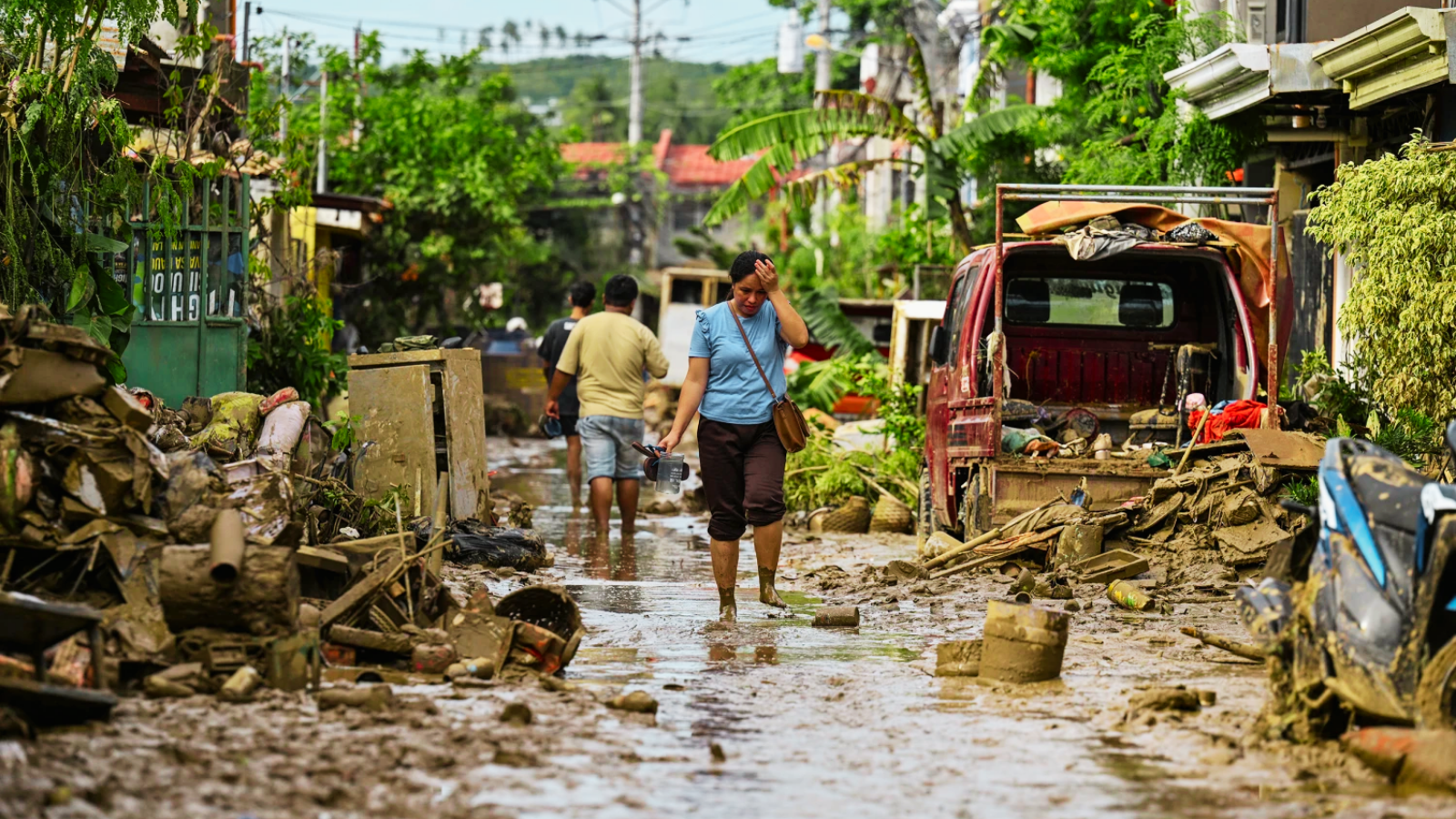
The eastern Philippines was already reeling from heavy rains and strong winds by Saturday evening as Typhoon Fung-wong approached. Authorities urged residents in Catanduanes and other low-lying coastal areas to evacuate to higher ground by Sunday morning. The storm swept past the Bicol region in the morning before moving over the Polillo Islands in the afternoon, bringing destructive conditions across the archipelago.
The civil defence office confirmed that one person drowned, while firefighters recovered the body of a woman trapped under debris in Catbalogan City. The impact on infrastructure has been severe: the civil aviation regulator closed several airports, leading to the cancellation of nearly 300 flights, stranding thousands of passengers.
Although Fung-wong was expected to weaken after landfall, forecasters warned it would likely remain a typhoon as it crossed Luzon, sustaining dangerous winds and torrential rainfall. The Japan Meteorological Agency (JMA) and the Philippines’ PAGASA both cautioned that rainfall totals could exceed 200mm in parts of Luzon, with 100–200mm forecast for Metro Manila. Such volumes raise the risk of severe flooding and landslides, particularly in mountainous and riverine communities.
The storm’s massive footprint has already disrupted daily life across the country. Schools and businesses have been closed, while emergency shelters are filling with evacuees. Authorities continue to warn that storm surges and multiple waves of flooding could arrive hours after the initial landfall, urging residents not to return prematurely to coastal areas.
Fung-wong’s arrival comes at a time of heightened vulnerability, as the Philippines is still recovering from Typhoon Kalmaegi, which killed more than 200 people just weeks earlier. The back-to-back disasters underscore the country’s precarious position on the Pacific Ring of Fire, where typhoons and earthquakes frequently collide with human settlements.
For now, disaster response teams are focused on rescue operations, clearing debris, and restoring power to affected provinces. The government has mobilized military units to assist in evacuations, while international aid agencies are monitoring the situation closely.
With forecasts predicting continued rainfall and strong winds, the Philippines faces days of uncertainty. The resilience of communities will once again be tested as they brace for flooding, landslides, and the long recovery ahead.









+ There are no comments
Add yours