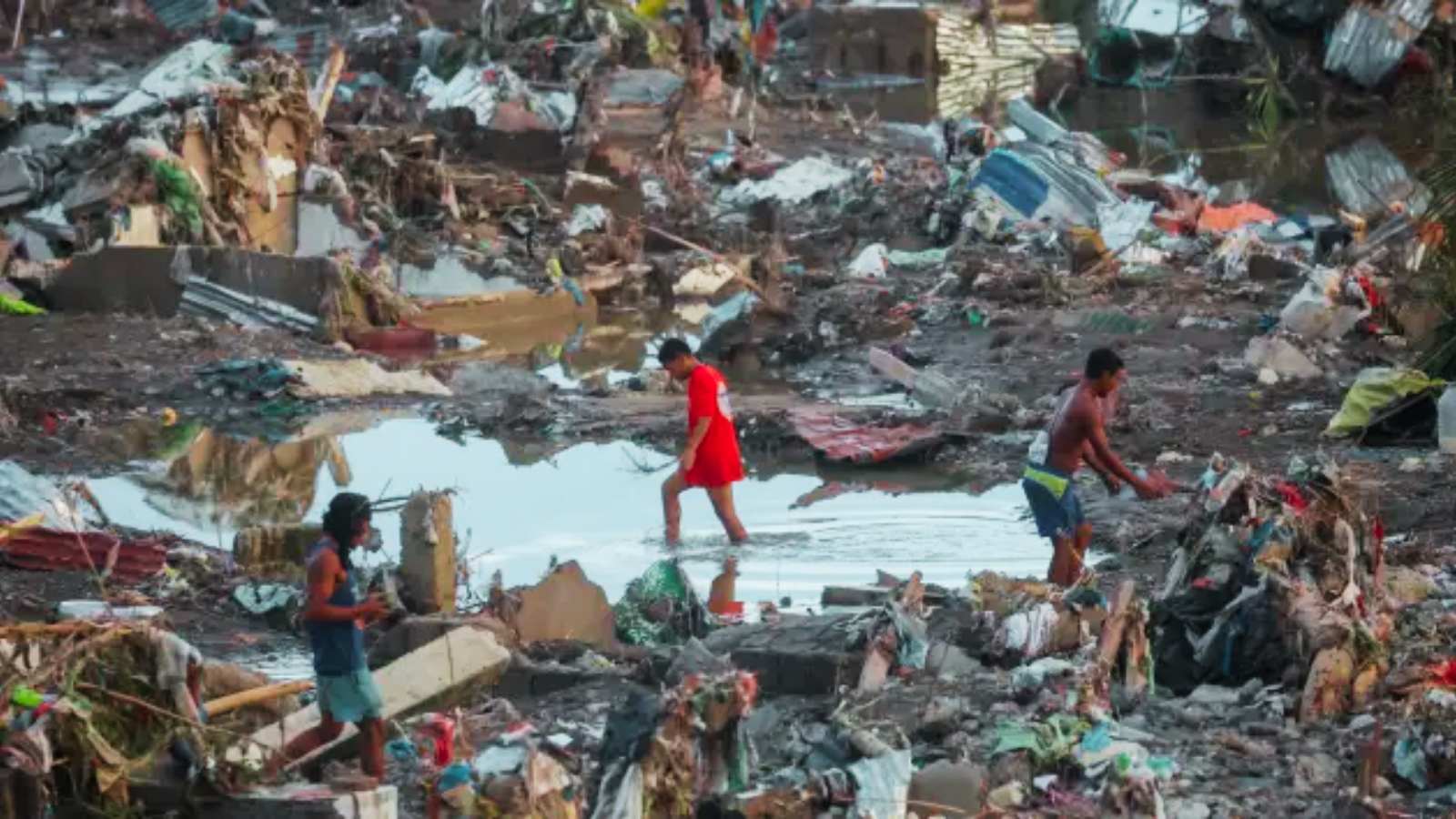
The Philippines is facing another looming disaster as Typhoon Fung-Ong barrels toward the archipelago, just days after Typhoon Kalmaegi devastated the country, killing more than 200 people and leaving nearly 100 missing. Meteorologists warn Fung-Ong could intensify into a super typhoon, with a circulation so massive it could cover nearly the entire nation.
Aftermath of Kalmaegi
Last week, Typhoon Kalmaegi struck with catastrophic force, flattening homes, uprooting trees, and destroying roads across Cebu province, the hardest-hit region. Families gathered in grief as victims’ bodies were laid in rows of coffins, while rescue teams struggled to locate the missing. Despite ongoing efforts, search and rescue operations were suspended on November 8, as conditions worsened with the approach of the new storm.
Fung-Ong’s Threat
According to the Philippines Atmospheric, Geophysical and Astronomical Services Administration (PAGASA), Fung-Ong’s enormous size means it could blanket the entire country with destructive winds and torrential rains. Authorities have already issued early warnings, opened emergency shelters, and urged coastal residents to evacuate to safer areas.
Meteorologists caution that storm surges could reach several meters high, posing life-threatening risks to low-lying communities. The typhoon’s impact is expected to compound the devastation left by Kalmaegi, overwhelming already strained relief efforts.
Human Toll and Preparedness
The humanitarian crisis is deepening, with thousands displaced and infrastructure severely damaged. Power outages, blocked roads, and collapsed buildings have left many communities isolated. Relief agencies are racing to deliver food, water, and medical supplies, but the suspension of rescue operations underscores the scale of the challenge.
Local officials stress that preparedness is critical, urging residents to heed evacuation orders and avoid coastal areas. The government has mobilized military and police units to assist in evacuations and maintain order as panic spreads among vulnerable populations.
Global Concern
The back-to-back storms highlight the Philippines’ vulnerability to extreme weather events, intensified by climate change. International aid organizations are monitoring the situation, with calls for urgent assistance to support recovery and bolster disaster resilience.
As Fung-Ong approaches, the nation braces for another round of destruction, hoping that early warnings and swift evacuations can save lives. For communities still mourning the losses from Kalmaegi, the arrival of a second powerful storm is a devastating blow, testing both resilience and unity in the face of relentless natural disasters.











+ There are no comments
Add yours